Financial Planning for a Baby: A Complete Checklist
Flower City Capital
Updated August 2026
A new baby changes your finances as much as it changes your life. Financial planning for a baby means getting your insurance, income, and estate plan in order both before delivery and in the months that follow. This checklist walks through what to handle and when.
Key Takeaways
- Start health insurance, daycare, and pediatrician decisions as early as possible, since daycare waiting lists alone can run six months or more.
- Know your leave options and update your bud
get and emergency fund before the baby arrives, so income changes don’t catch you off guard. - Handle birth certificate, Social Security, and insurance
paperwork within the first days after birth. - Review life insurance, beneficiaries, your will, and a 529 plan within the first three months to protect your family long-term.

What Should You Do Financially Before Your Baby Arrives?
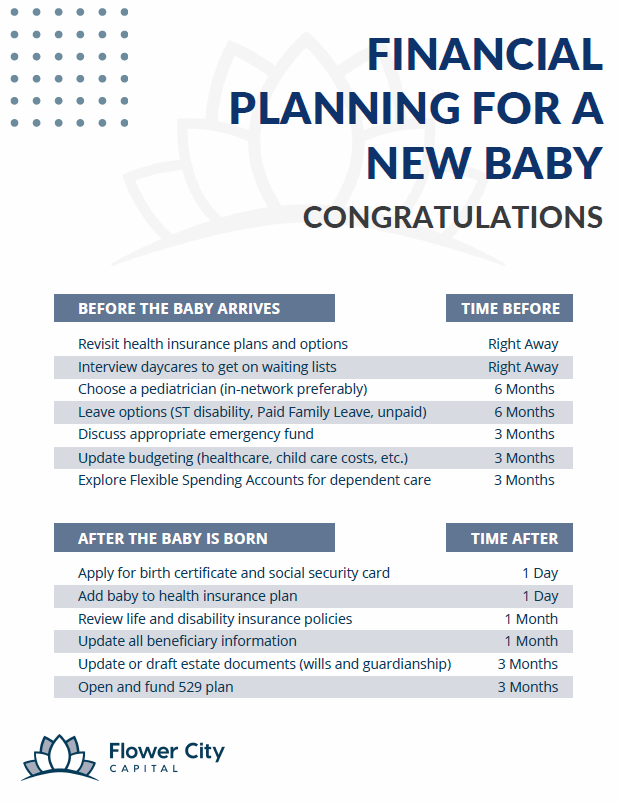
Before your due date, review your health insurance coverage, start daycare and pediatrician searches, and understand your paid leave options, since each of these affects your budget once the baby comes. Waiting lists and open enrollment windows make early action especially important here.
Health insurance costs for delivery and newborn care vary widely by plan, so confirm your deductible and out-of-pocket maximum as soon as you know you’re expecting. Interview daycares early, since quality centers often have waiting lists stretching six months to a year, and choose an in-network pediatrician to avoid billing surprises. At the same time, find out what income your short-term disability or Paid Family Leave will replace, and use that number to update your household budget, resize your emergency fund, and enroll in a Dependent Care FSA if your employer offers one.
What Financial Steps Should You Take in the First Days After Birth?
In the first days after birth, apply for your baby’s birth certificate and Social Security card and add them to your health insurance plan. Most hospitals will start this paperwork before you’re discharged, so there’s rarely a reason to delay either step.
Getting the Social Security number issued quickly matters because you’ll need it for insurance, tax, and benefit purposes down the line. Health insurers typically allow 30 days to add a new dependent, but enrolling right away avoids any coverage gap before that first pediatrician visit.
What Long-Term Financial Planning Does a New Baby Require?
Within the first few months, review your life and disability insurance, update beneficiary designations, draft or revise your will, and consider opening a 529 plan. These are the pieces of financial planning for a baby that protect your family well beyond the newborn stage.
A new dependent changes how much life insurance coverage your family actually needs, so revisit your policy limits rather than assuming your old coverage still fits. Retirement accounts and life insurance pass according to their beneficiary designations regardless of what your will says, so update those directly. If you don’t have a will, this is the moment to draft one, largely so you can name a guardian for your child. And a 529 plan lets even small, early contributions grow tax-free toward future education costs.
Financial planning for a baby touches nearly every part of your financial life, from insurance to taxes to your estate plan. As a fee-only fiduciary firm, our advisors can help you work through this checklist and build a plan that fits your family. Reach out to schedule a conversation.
Frequently Asked Questions
When should I start financial planning for a baby?
Ideally as soon as you know you’re expecting. Health insurance decisions, daycare waiting lists, and paid leave enrollment all have lead times of three to six months, so early action gives you the most options.
How much of an emergency fund do I need with a new baby?
Most families need to increase their existing emergency fund once a baby arrives, since costs like formula, medical co-pays, and child care add new categories of unpredictable expense. Recalculate your three-to-six-month target based on your updated budget.
Do I need to update my will after having a baby?
Yes. A will is how you name a legal guardian for your child, which makes it one of the most important documents to have in place, or update, once a child is added to your family.
What is a Dependent Care FSA?
A Dependent Care Flexible Spending Account lets you set aside pre-tax dollars to pay for qualifying child care expenses, which can lower your taxable income. Enrollment is usually tied to your employer’s open enrollment period.